Casa Cuatro Soles
Chain + Siman

Short description
Casa Cuatro Soles is a weekend residence located in Rancho Avándaro, south of the network pueblos mágicos (magical towns) of Avándaro and Valle de Bravo. Rancho Avándaro stands out for being one of the most exclusive residential developments in the area surrounding the dam (La Presa) at Valle de Bravo. It has 120 hectares of private development, surrounded by lakes, rivers and forests.
The project was designed for a three-generation family. This consists of the grandparents (who commissioned the project), their three children, and the grandchildren, ranging from newborns to teenagers. The goal was to create a weekend or vacation home for the entire family. Each family group had distinct needs, so all the bedrooms were designed with each member in mind. The public areas are designed for mingling, to accommodate the largest number of users and facilitate togetherness between the different families and members.
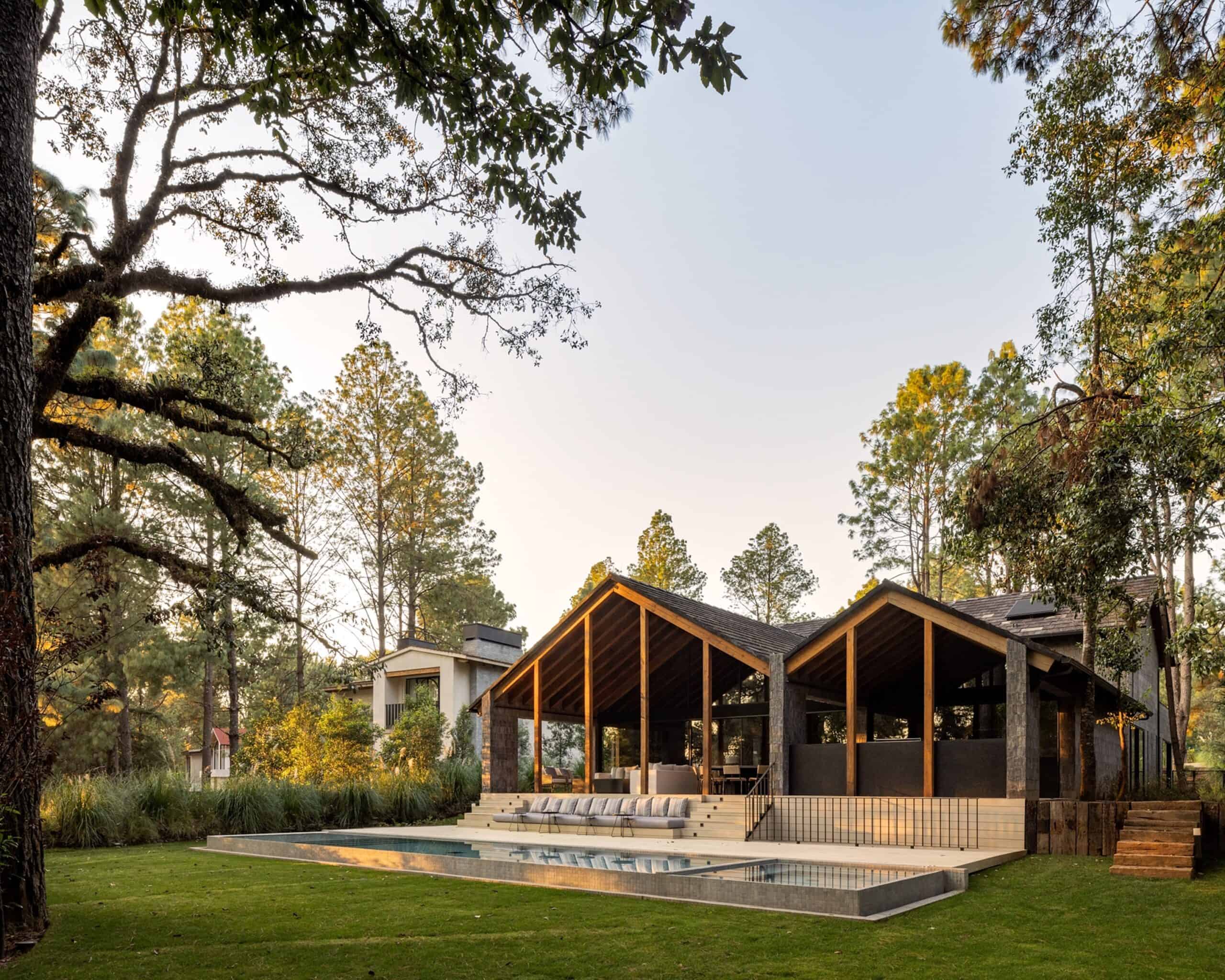
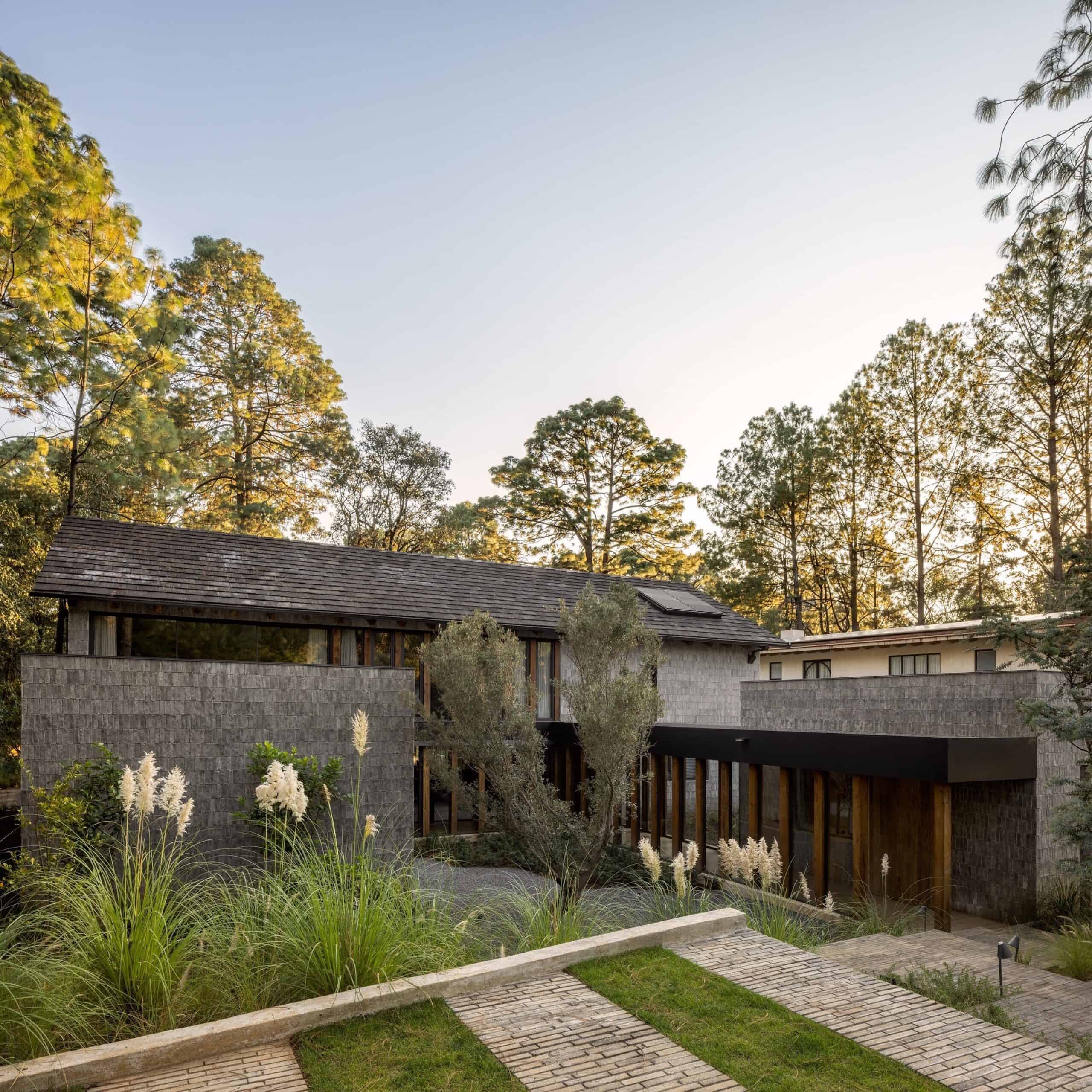
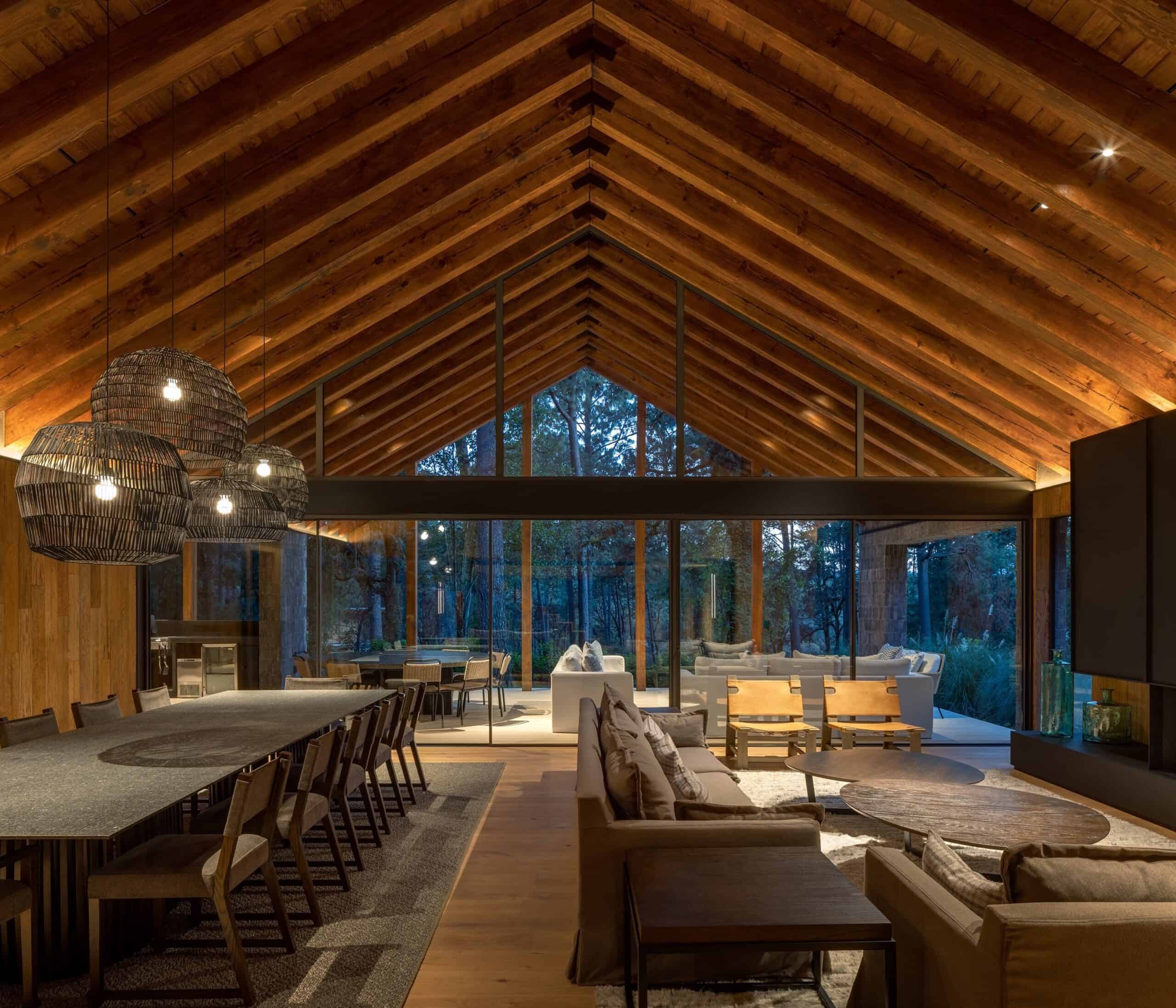
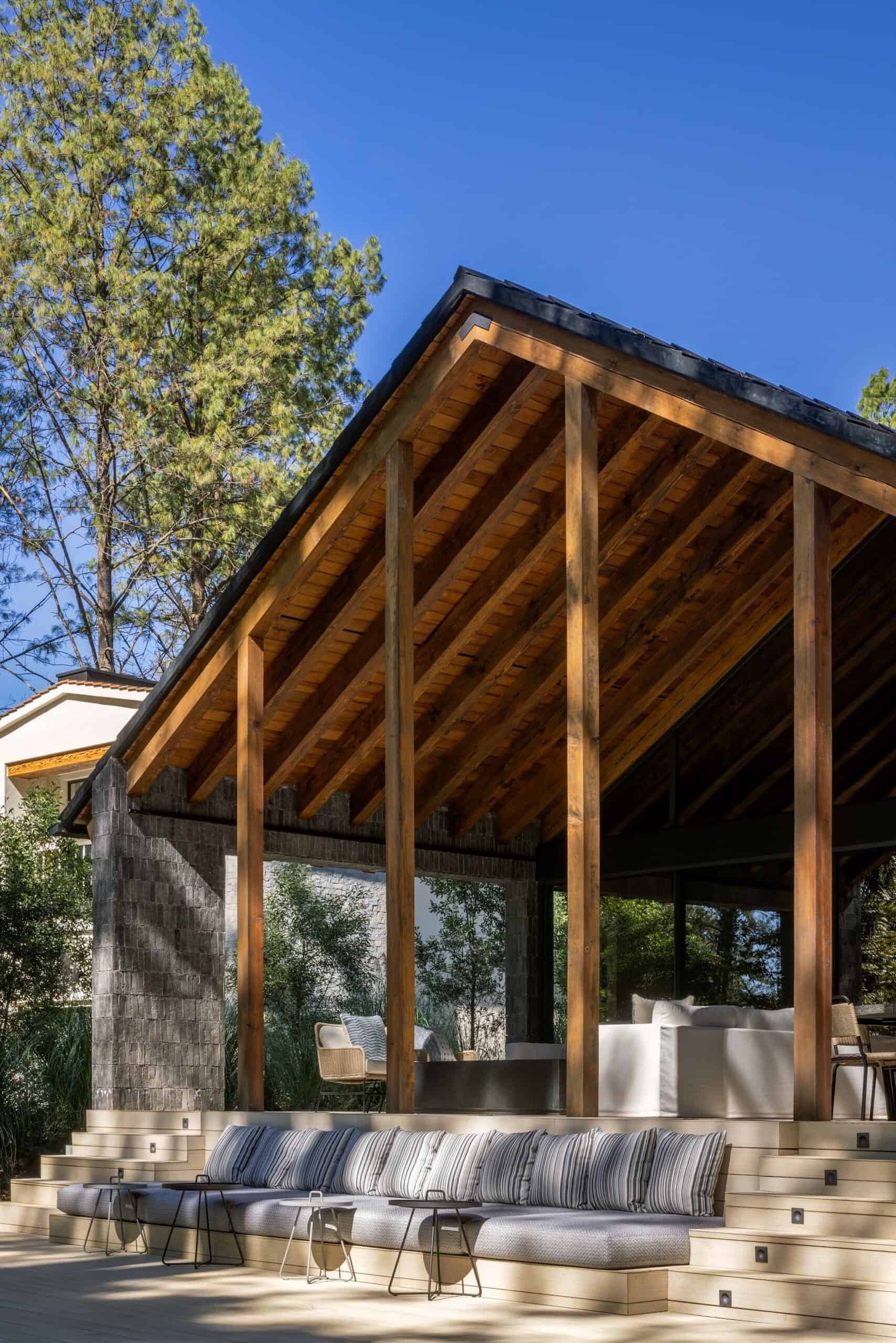
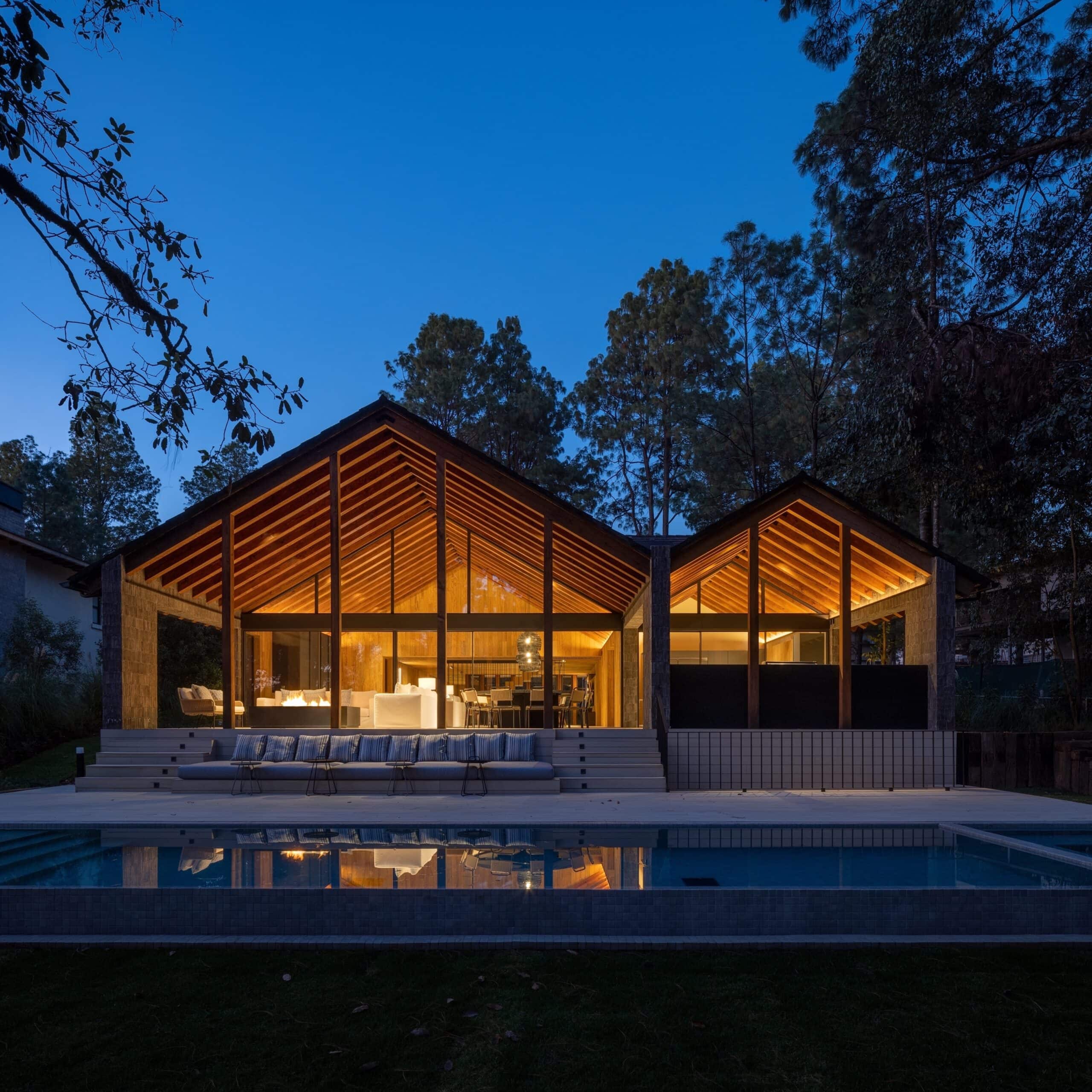
The concept revolves around translating the diversity of the users ages and relationships into various formal and material contrasting interpretations that can interact with each other, resulting in an unexpectedly diverse and coherent architectural language seen from the different zones of the plot. This formal transition can be seen mainly from the rear façade; on the east and west sides, they establish different readings and evoke the atmosphere of a contemporary country house. The residence is divided into two main volumes organized perpendicularly and a small secondary rectangular volume connected to a corridor that serves as the main entrance and that houses a utility room. The roofs of these main volumes are gabled; they have an Oyamel structure and beams that support the black clay tiles. They were configured to generate pentagonal geometries that break the continuity of the long, horizontal, and rectangular lines of the entry and the vertical lines of the beams.
The architectural style was chosen to establish a dialogue between traditional inspiration, dominated by materials and construction processes, and a contemporary style, shaped by geometry and a formal proposal. The house was deliberately oriented to maximize the views of the surrounding landscape, so the height of the roofs and the opening to the south seek to frame the forest.
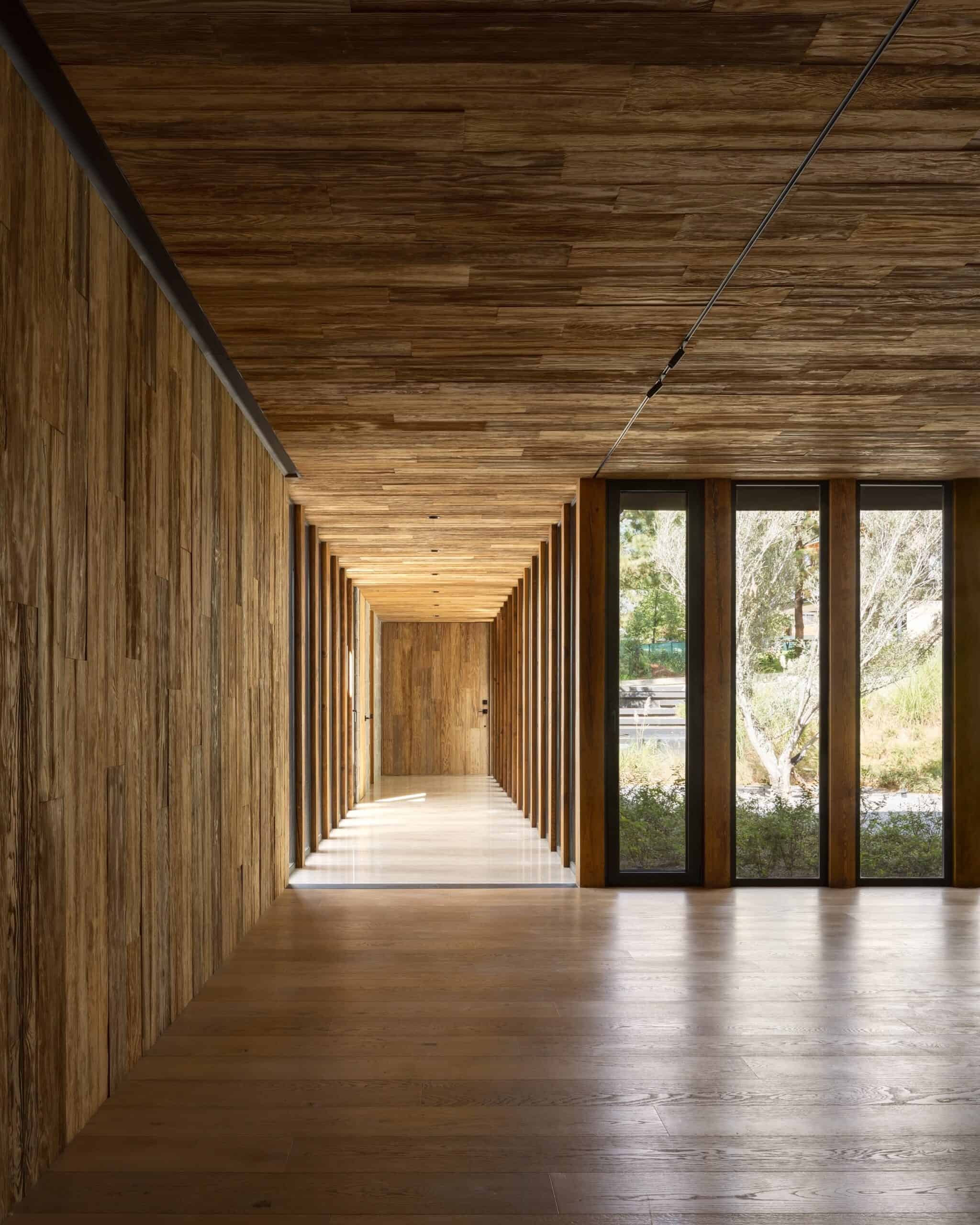
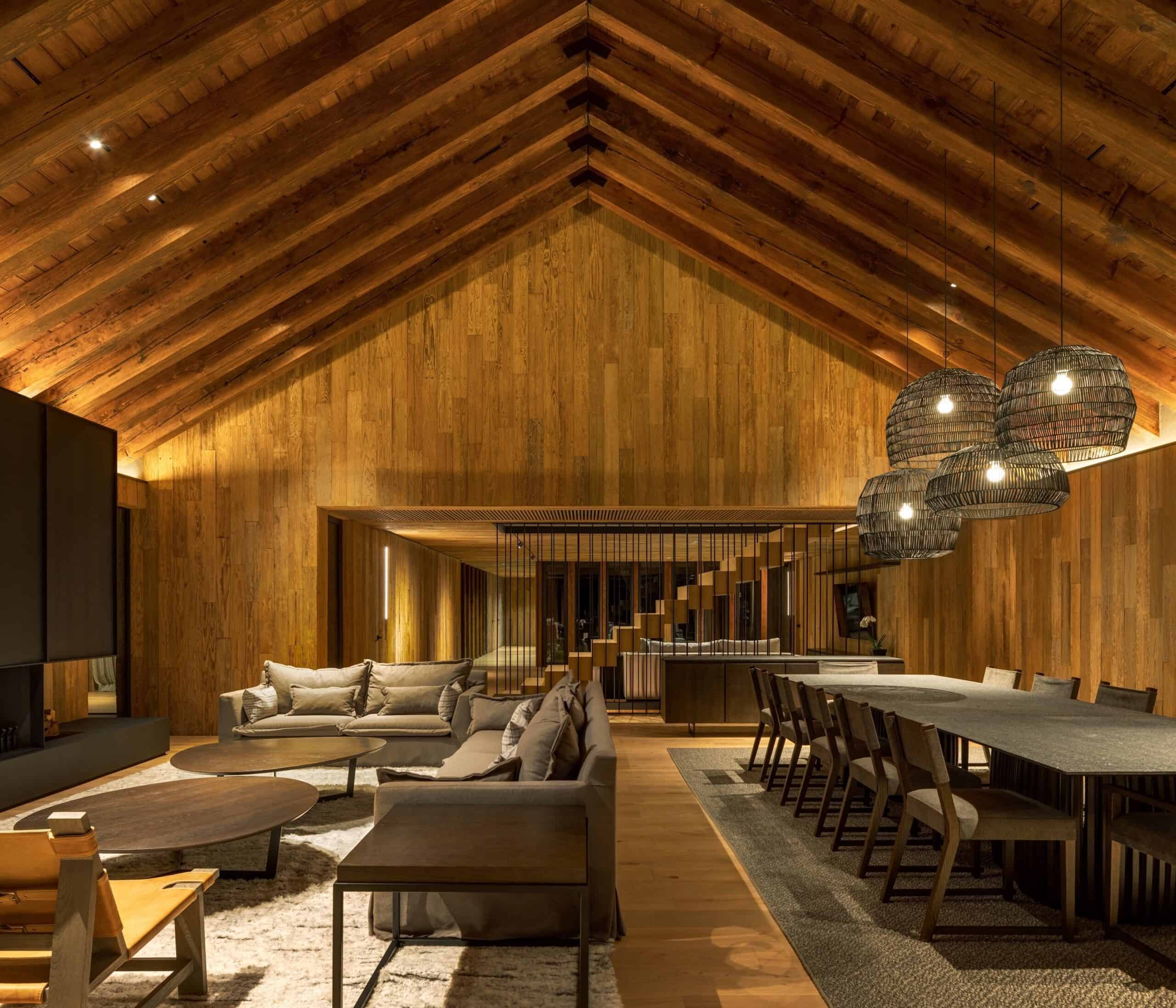
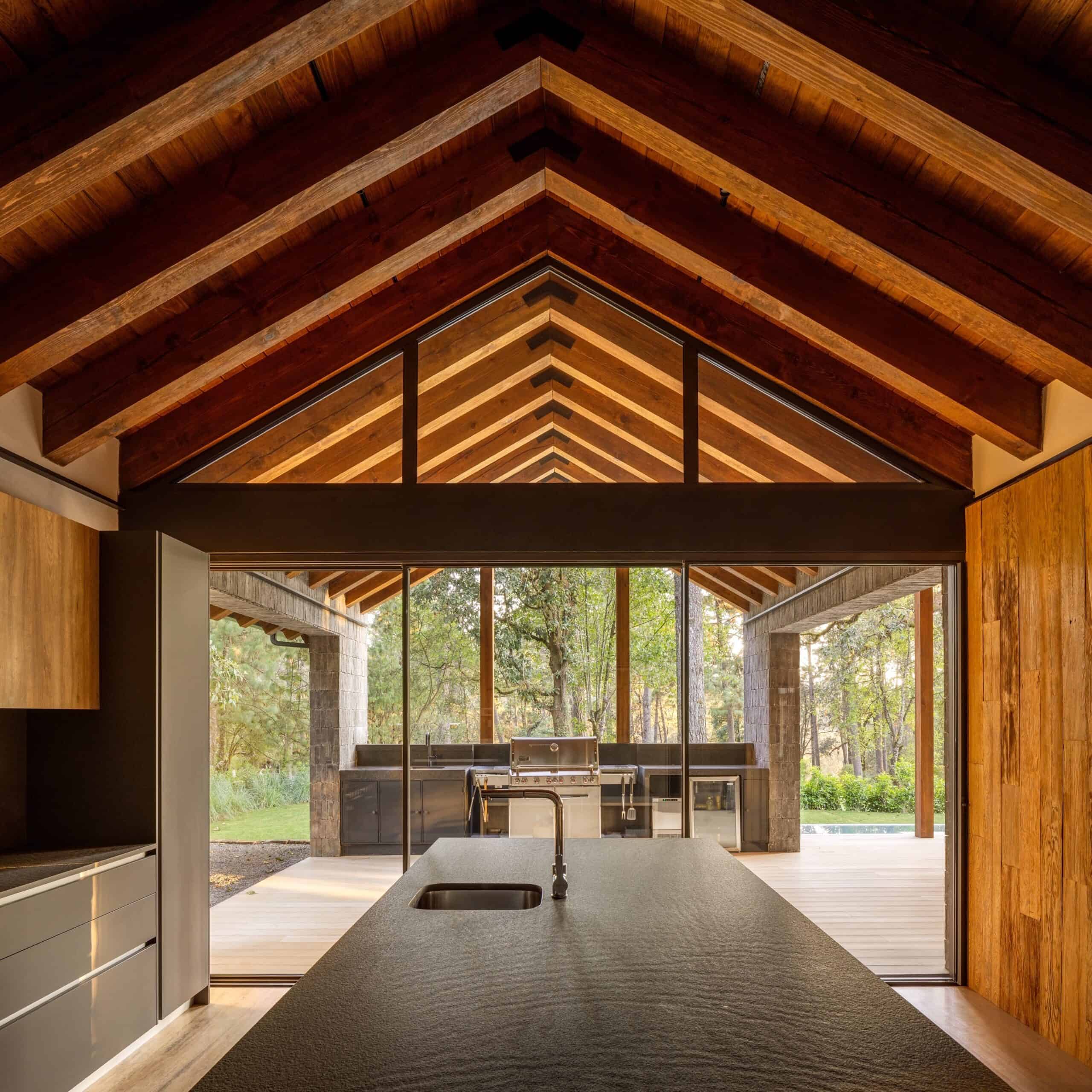
The main entrance consists of a long hallway with floor-to-ceiling windows and a small volume that houses a utility room. The corridor is established as a prelude that leads users through an experience featuring a dialogue of warm materials and natural lighting. Then the project welcomes visitors into a hall that gradually transforms into different common spaces. On the sides of this reception space, three secondary bedrooms are located, two on the east periphery and one on the west periphery. An intermediate transverse corridor blurs the transition to the main living room, dining room and kitchen. These three spaces are contained by a large double-height window that connects to the terrace and the surrounding landscape. This last space houses a small living room, a dining room and the grill area, which connects directly to the kitchen inside. The tour ends at the sundeck and pool.
The materials chosen for the project's exteriors respond to Rancho Avándaro's strict internal regulations. These establish that they cannot be light-colored or white, nor can they be used in facades, detailing or window and door frames. The materials selected solved this limitation by using black clay tiles, gray partition walls and black aluminum window and door frames to connect with its immediate context. The cold exterior color scheme blends in with the surrounding wooded landscape and gives the illusion of disappearing. The project was also limited by the internal regulations of the residential complex regarding the coefficients of use and occupancy, so the house was designed to keep this set of rules and prerogatives in mind.
The house was built using traditional processes. The exterior walls of the two main volumes and the secondary volume are covered with handmade gray brick. The roofs of the main volumes are made of flat black clay tiles and the columns in the access corridor and the support columns on the rear façade are made of local Mexican Oyamel, while the roof of the access corridor features a black steel structure. The interior materials feature three different woods. The aesthetics of this material dialogue between the three types of wood was fully leveraged to create the same architectural language throughout the interior of the project. Firstly, the oak floors were engineered for acoustics and to regulate the indoor temperature. Secondly, the interior walls, ceilings and soffits feature thermo-treated pine. Finally, the roof structure is composed of beams and solid wood staves constructed from local Mexican Oyamel. The gray aluminum window and door frames are superimposed on the steel structure. The structural support of the staircase produces a delineating black steel handrail and a geometry that emphasizes its position within the interior spaces.
The interior chromatic palette is warm with cool and dark contrasts produced by the furniture, the window frames and the stair structure. The exterior palette is cool with warm details in the columns of the access corridor and the roofs.
The project features both active and passive sustainable systems. The active systems include solar panels, a rainwater harvesting system, a wastewater reuse treatment plant, and Duovent glass for thermal and acoustic efficiency. In the passive systems, the large windows and domes maximize natural light to reduce energy consumption. Cross ventilation operates throughout the house to maintain a cool indoor environment.
Casa Cuatro Soles is an architectural project that harmoniously integrates the natural environment and the needs of a multigenerational family. The residence offers a peaceful retreat surrounded by wooded landscapes. The design of the house combines traditional and contemporary elements, creating a diverse architectural language that can be appreciated in the different facades. This project achieves a balance between aesthetics, functionality and sustainability, offering the family a cozy place to enjoy and escape from the urban routine.
Entry details