Commercial-Recreational-Cultural
900 Consulting Engineers

Short description
Sepehr Goldaste Commercial, Recreation, and Cultural Complex
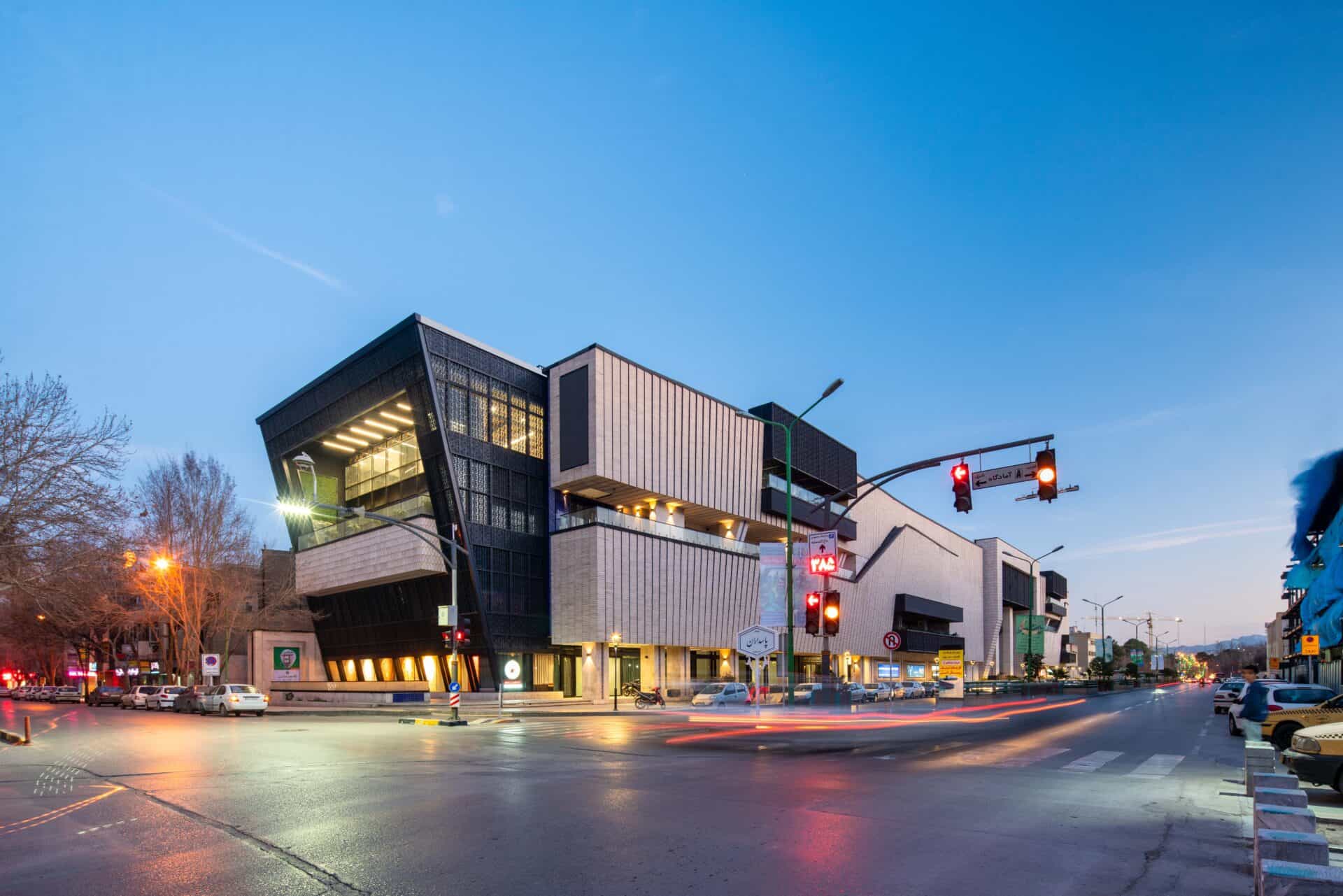
The Sepehr Goldaste complex is located in the heart of the historical and cultural fabric of Isfahan, near famous historical sites such as the Abbas Hotel, the Imam Sadiq School, the Hasht Behesht Palace, Chahar Bagh Street, and the Si-o-Se Pol Bridge. This project was designed with the aim of creating an introverted building that utilizes modern technology while respecting the rich Iranian architecture.
Design Challenges:
Respect for the Historical Context
Building a commercial complex in an area with so much history and culture requires special respect for the historical context. One of the main challenges was to strike a balance between modernity and tradition, so that the historical identity of the area is not compromised while also meeting the modern and economic needs of the project.
Attention to the Project's Economics
In designing this complex, in addition to beauty and harmony with the environment, it was necessary to consider the project's economics and investment objectives. This required the use of up-to-date technologies and quality materials that could also control costs.
Every architectural building has two external and internal aspects.
Exterior Appearance
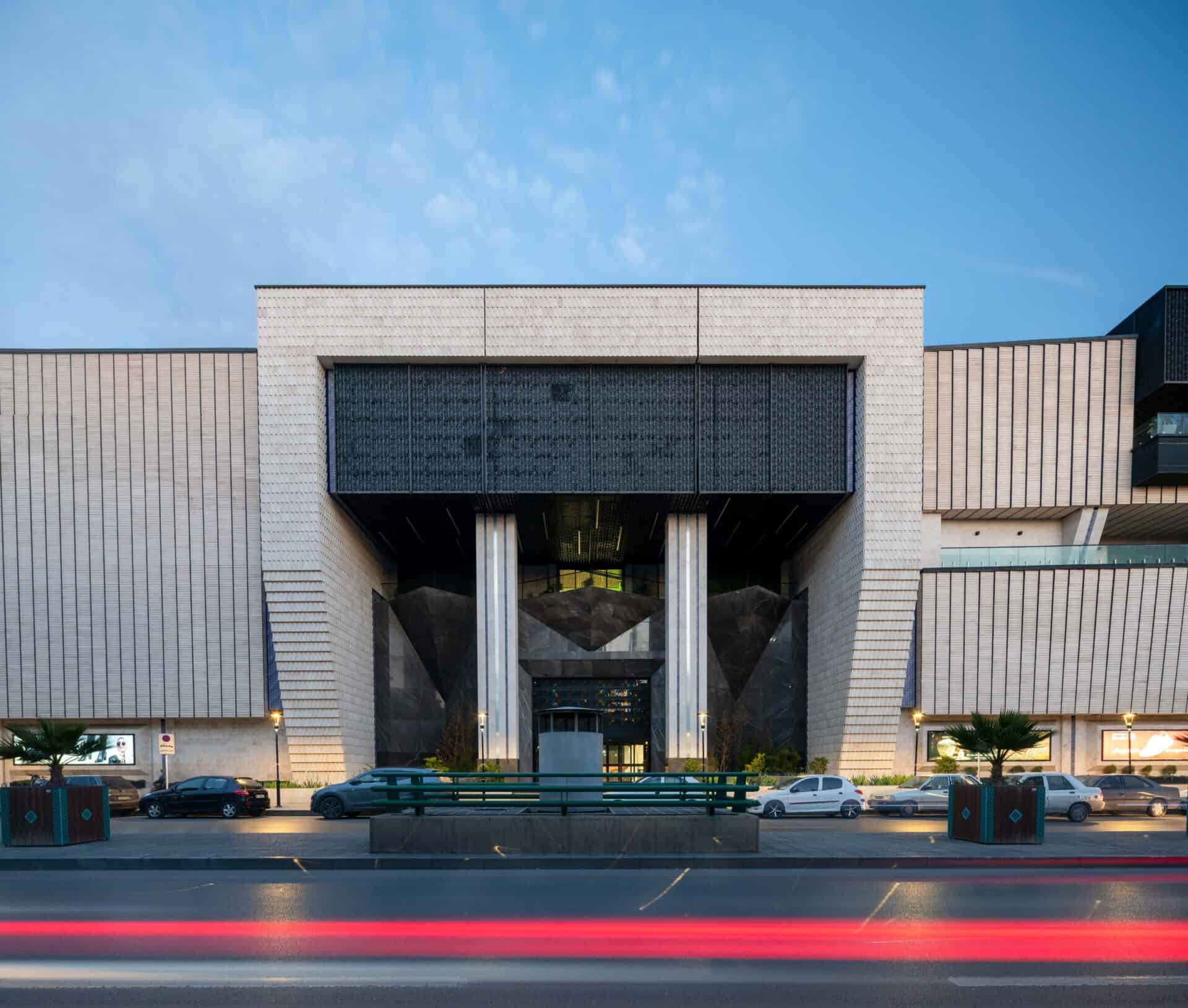
The exterior facade of the Sepehr Goldaste complex is designed using parametric bricks. These bricks are oriented in a way that they appear glazed on one side and parametric on the other. This design creates dynamism and beauty in the facade.
Inspiration from Historical Buildings
The facade design is inspired by historical buildings in Isfahan. For example:
- Recession of the lower side of the building: This feature is designed in imitation of the form of the Abbas Hotel.
- Creating rhythm in the facade: Similar to what is seen in Naqsh-e Jahan Square.
- Breaks in the facade: Reminiscent of the Isfahan Qeysarie Bazaar.
Use of Traditional Arts
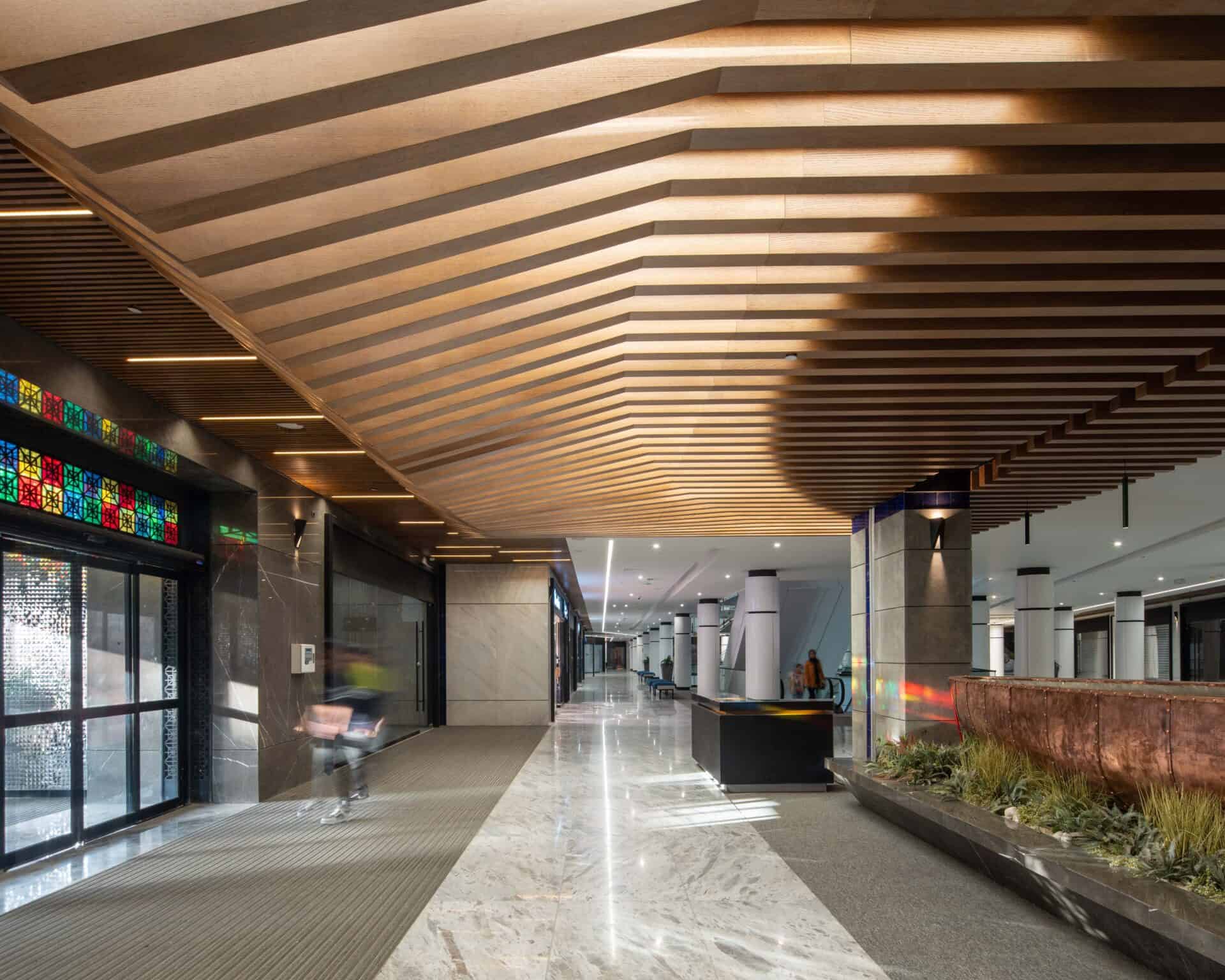
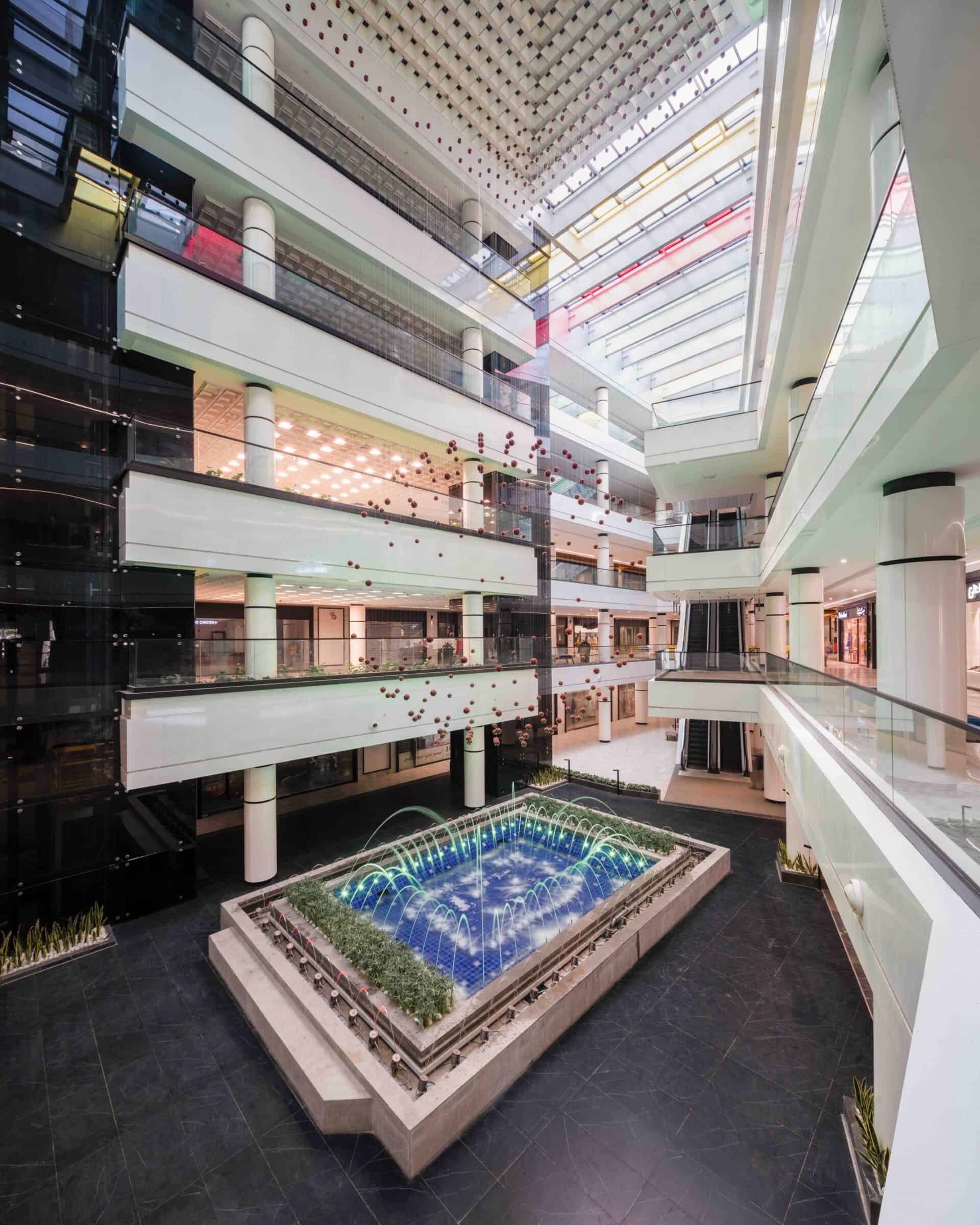
The facade of the complex utilizes traditional Iranian arts such as brick masonry, tile work, plasterwork, and geometric patterns. The corners and edges of the facade also feature traditional arts like knot-making, framing, muqarnas, and tile work. The use of plants and a water feature in the building's facade and entrance, in addition to their aesthetics, create a calming atmosphere.
Entrance and Inviting Nature
Entrance Design
The building's entrance is designed with special decorations, indicating the threshold of a space separate from the public outdoor area. The design of the modern facade body and the protrusion at the top of the facade in the form of a volume, as well as the use of CNC-carved arabesque patterns, demonstrate the interaction of tradition and modernity.
Interior Spaces and Porticos
Portico Design
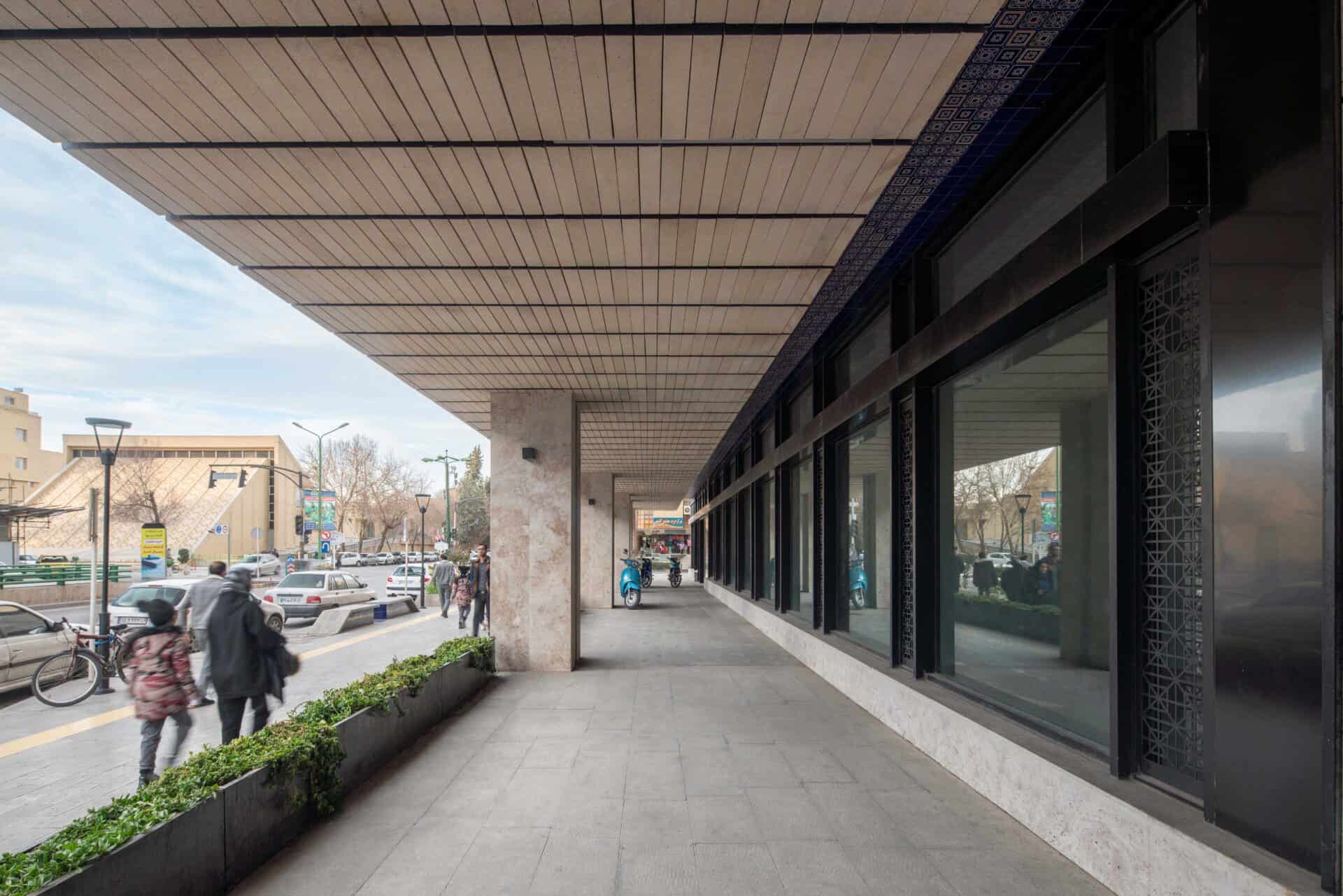
The porticos designed on the building's facade are limited to a 45-degree angle to the ceiling, in order to provide visual diversity and preserve the spatial quality of traditional porticos. This design helps maintain harmony with Iranian architectural traditions.
Interior Spaces
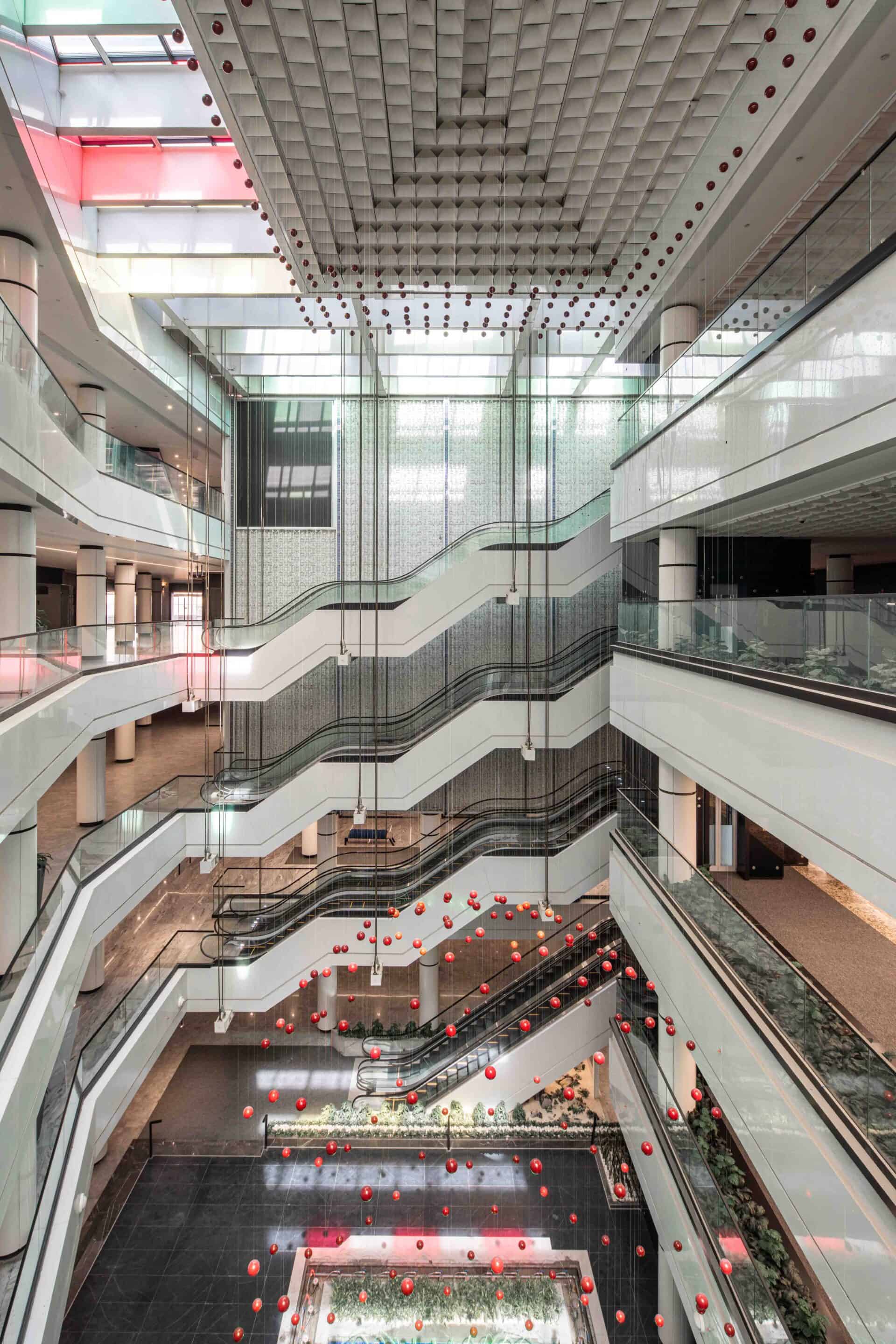
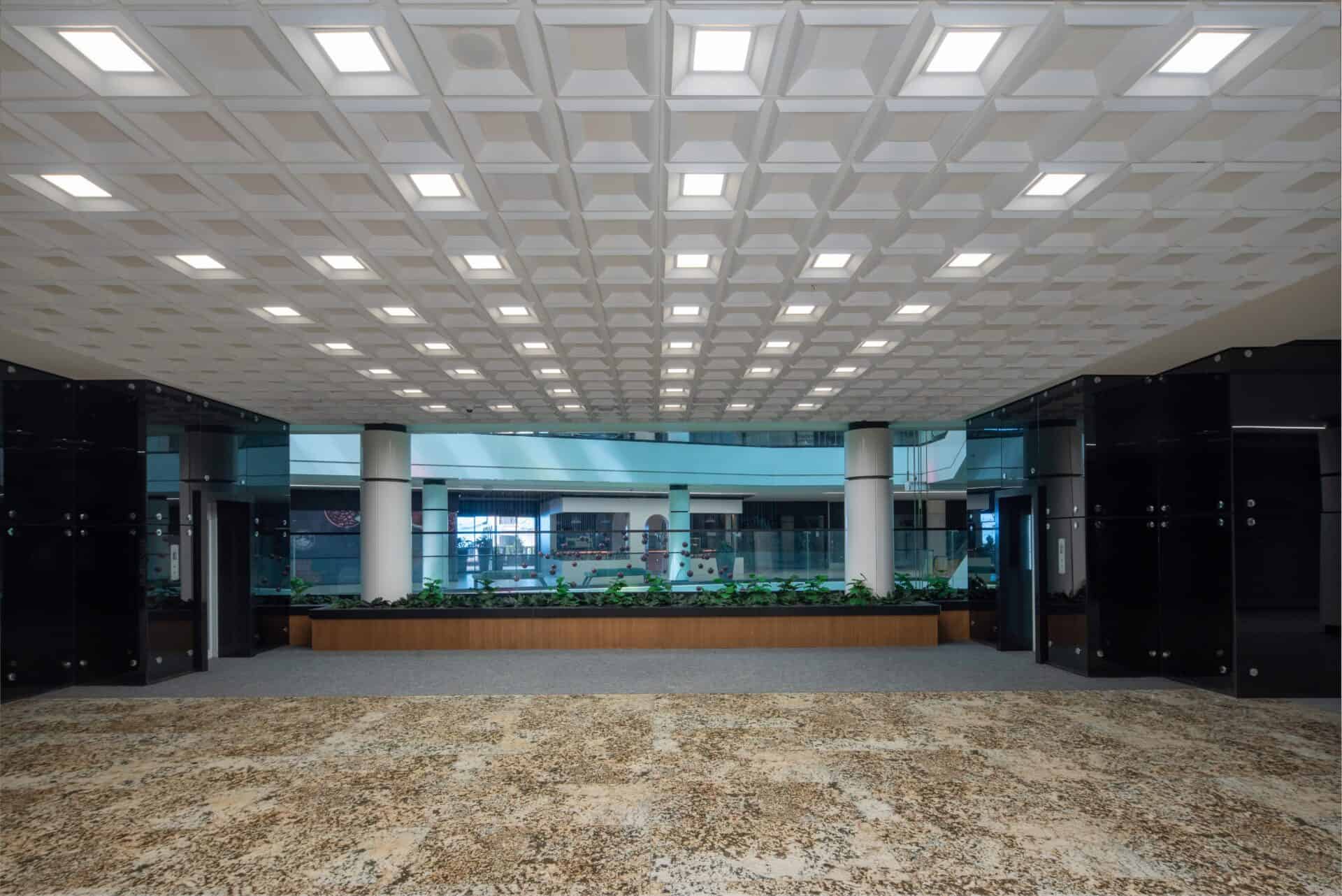
The interior space of the complex is full of dynamism and movement. The central void creates a dynamic lighting quality inside the project. At different times of the day, the movement of the sun has varying effects on the visual quality of the interior spaces. In addition to natural light, this central void also enhances the sense of an open and inviting spatial quality.
Sense of Life and Calmness Through Light and Color
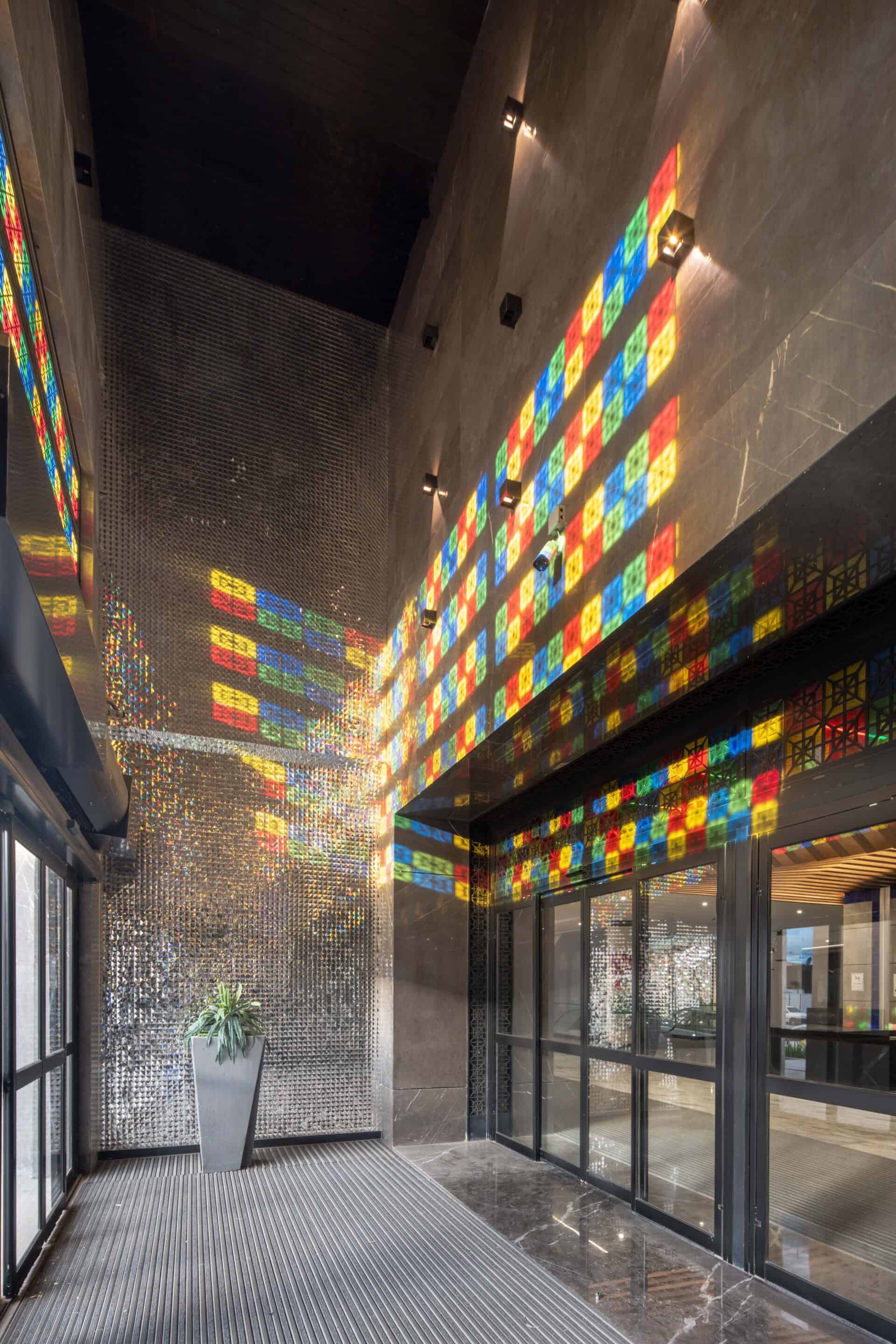
The use of reflected colored lights, moving spheres, and other decorative elements instills a sense of liveliness in the visitors. These elements make the space appear vibrant and lively.
Combination of Tradition and Modernity
At the same time, the silence and simplicity of the space slow down and extend the concept of time, in contrast to the fast-paced modern urban space. From the outside, this large, unified volume built with brick somehow displays a sense of calmness and a natural connection with the surrounding environment.
Relationship with Citizens and Preservation of Cultural Connection
In the design of the project, efforts have been made to maintain the building's connection with the citizens, including those who come to the Amadegah Street for medical visits.
Entry details